
What Are Customer Accounts in Ecommerce?
Customer accounts in ecommerce are personalized areas within an online store where customers can log in to manage their orders, profile information, and interactions with the brand.
In simple terms, a customer account acts as a personal dashboard for shoppers.
A modern ecommerce customer account typically allows customers to:
- Track order status in real time so they know when their purchase will arrive.
- Access past purchases easily to review or reorder products.
- Manage personal account information such as addresses and contact details.
- Contact customer support directly from the account dashboard.
- Access product related services like warranties, downloads, or subscriptions.
For DTC brands, customer accounts are not just operational tools. They are an important part of the overall customer journey and brand experience.
How Customer Accounts Improve Customer Retention
Customer retention is one of the most important metrics for long term ecommerce success.
Research from Harvard Business Review shows that acquiring a new customer can cost five to twenty five times more than retaining an existing one.
This is why many successful DTC brands focus on building systems that encourage customers to return.
Customer accounts contribute to retention by creating a place where customers continue interacting with the brand even after the purchase is complete.
For example, customers often return to their account to:
- Check order updates and delivery progress
- Reorder products they previously purchased
- View saved items in their wishlist
- Access warranties or product documentation
Each time a customer logs in, they reconnect with the brand, increasing the chances of repeat purchases.
Customer Accounts Improve the Post Purchase Experience
For DTC brands, the customer journey does not end at checkout. In fact, the post purchase experience often determines whether a customer becomes loyal or never returns.
Customer accounts help brands deliver a smooth and transparent experience after purchase.
A well designed account area allows customers to:
- View order history and delivery updates without contacting support
- Manage their profile information and addresses easily
- Access support services or product information when needed
- Track warranties, subscriptions, or digital downloads
These features reduce friction and build trust between the brand and the customer.
For Shopify merchants, delivering a great post-purchase experience also means resolving customer account issues quickly. Tools like the Magefan Login As Customer app let support teams securely access a customer’s account to troubleshoot issues faster and provide more efficient assistance.
According to research from HubSpot, 93% of customers are more likely to make repeat purchases from companies that offer excellent customer service.
Customer accounts play an important role in delivering that experience by giving customers more control over their interactions with the brand.
Customer Accounts Help Increase Repeat Purchases
Repeat customers are one of the most valuable assets for any DTC brand.
Returning shoppers usually:
- Spend more per order
- Convert faster than first time buyers
- Require lower marketing costs
- Recommend the brand to others
Customer accounts make repeat purchases easier by reducing friction in the buying process.
For example, customers can:
- Reorder previously purchased products quickly
- Save products in a wishlist for future purchases
- Access personalized recommendations based on past orders
- Store delivery information for faster checkout
When customers can quickly find products they like and reorder them easily, the likelihood of repeat purchases increases significantly.
Over time, this leads to higher customer lifetime value (CLV) for the brand.
Customer Accounts Enable Personalization
Modern ecommerce customers expect personalized experiences when shopping online. Customer accounts make personalization possible by storing valuable customer data.
Brands can use this data to:
- Understand purchase behavior
- Identify product preferences
- Segment customers for marketing campaigns
- Offer targeted promotions
For example, DTC brands may allow customers to store additional information such as:
- Birthdates
- Product preferences
- Company details for B2B buyers
- Special delivery instructions
This information helps brands provide a more tailored shopping experience.
Personalization also strengthens the relationship between customers and brands, which further improves retention.
What Features Should a Modern DTC Customer Account Include?
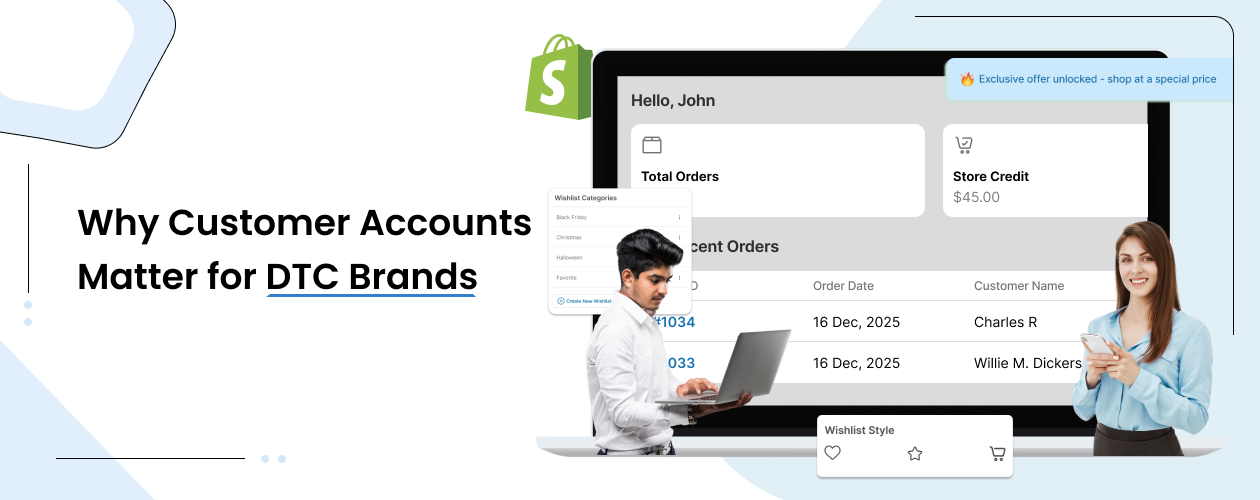
A modern ecommerce customer account should act as a customer engagement hub, not just an order history page.
Key features often include:
- Customer dashboard showing recent activity and quick actions
- Wishlist functionality for saving products
- Order history and order tracking
- Reorder options for repeat purchases
- Custom customer profile fields
- Access to digital downloads or warranties
- Promotional announcements and updates
These features encourage customers to interact with their accounts regularly, which increases brand engagement.
The Risk of Ignoring Customer Accounts
Many DTC brands underestimate the importance of the customer account experience.
Ignoring this area can create several problems:
- Lower customer retention rates
- Increased customer support requests
- Missed opportunities for repeat purchases
- Weak post purchase engagement
When customers cannot easily manage their orders or interact with the brand after purchase, they are less likely to return.
Investing in a better customer account experience helps brands avoid these challenges.
Which DTC Brands Should Focus on Customer Accounts?
Customer accounts are valuable for most ecommerce businesses, but they are especially important for DTC brands that:
- Sell products customers purchase repeatedly
- Offer warranties or product services
- Sell digital products or subscriptions
- Want to improve customer lifetime value
- Want to reduce support workload
In these situations, the customer account becomes a central part of the customer experience.
Conclusion
For many DTC brands, growth strategies focus primarily on acquiring new customers through advertising and marketing campaigns. While acquisition is essential, sustainable ecommerce growth depends on building long term relationships with existing customers.
Customer accounts play a crucial role in this process. They improve the post purchase experience, enable personalization, and make it easier for customers to return and purchase again.
Instead of treating the “My Account” page as a simple order history section, brands should view it as a customer engagement hub that strengthens loyalty and improves retention.
For Shopify merchants looking to expand their customer account capabilities, tools like Accofy Customer Accounts can help transform standard accounts into a more powerful experience with features like dashboards, wishlists, customer fields, and order management tools.
By investing in a better customer account experience, DTC brands can increase repeat purchases, improve customer satisfaction, and build stronger long term relationships with their customers.